week 1: poetry, folklores, & art depictions
During one of the first evenings of the year, I mindlessly chose to put on Laila Majnu, a 2018 Bollywood movie directed by Sajid Ali. While I had heard the term “Laila-Majnu” many times, I knew very little about this classic folktale.
My journey began after watching the movie and realizing how popular this folktale is. I instantly realized I wanted to learn more for the first week of my 2025 Art Challenge. A challenge I came up with at the end of last year in an attempt to conciously consume more art in different forms and study it. I don’t have a formal art education and so it is really important to find different avenues to learn from.
A Bollywood Perspective: Laila Majnu (2018)
The film reimagines the classic story in a modern setting, capturing the intensity and passion of forbidden love. What struck me most was how the movie intertwined traditional elements with contemporary emotions, making the age-old story feel fresh yet deeply rooted in its origins. The emotional depth, stunning visuals of Kashmir, and soulful soundtrack transported me into the world of Laila and Qays, leaving me eager to delve deeper into its origins.
The Origins of Layla and Majnun
Layla and Majnun is a story that traces back to 7th-century Arabia, attributed to the poet Qays ibn al-Mulawwah. Deeply in love with Layla, Qays composed poems expressing his devotion, which eventually earned him the name “Majnun” meaning possessed or madman. Despite his love, societal pressures and Layla’s arranged marriage to another man kept the lovers apart, leading to a tragic and spiritual culmination of their bond.
Most of his recorded poetry was composed before this tragic madness.
I pass by this town, the town of Layla
And I kiss this wall and that wall
It’s not Love of the town that has enraptured my heart
But of the One who dwells within this town
Persian Adaptation
The folklore gained prominence when Persian poet Nizami Ganjavi adapted it into an epic poem in the 12th century. Nizami’s version of Laila-Majnun elevated the tale into a masterpiece of Sufi literature, intertwining themes of divine love, human longing, and the transcendence of worldly bonds.
To truly appreciate the beauty of this story, I’ve added excerpts from Nizami’s poem below. One of the most striking lines that stayed with me was:
“Layla’s face was as bright as the full moon,
Yet, Majnun’s love illuminated his soul more brilliantly.”
This line encapsulates the story’s central theme—how love, even in its unfulfilled and painful state, becomes a source of spiritual enlightenment.
Another powerful excerpt describes Majnun’s state of longing:
“In the desert of his sorrow,
He wandered, lost and alone,
With Layla’s name on his lips,
And her image carved into his heart.”
Insights
I’ve gained a deeper appreciation for how stories transcend boundaries, evolving into new forms of art over centuries. From oral traditions to epic poetry to modern-day cinema, the tale of Layla and Majnun continues to inspire artists and audiences alike. It is a classic story, much like Romeo and Juliet.
However, unlike many classics coming from the west, folklore from the east like Layla and Majnun carry a much bigger sense of spirituality and culture. Resilience & faith in God.
Have you encountered the story of Layla and Majnun before? If so, what version or adaptation resonated with you the most? Let me know in the comments, and feel free to share your thoughts on how timeless tales like this continue to shape our understanding of art and humanity
Here’s to another week of learning and discovering the beauty of creative expression!
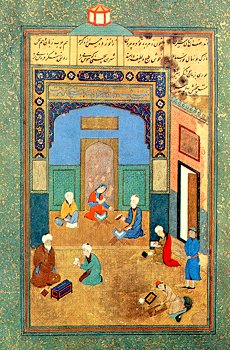
( 15th – 16th Century )


 art by fari
Leave a reply to Darryl B Cancel reply